In 2018, God rescued me. That’s not dramatic language. That’s precise language. He brought me out of a toxic marriage that had slowly unraveled my sense of safety, my sense of self, and my nervous system. What followed wasn’t just freedom — it was a diagnosis: complex PTSD. I wrestled with those four letters for over a month. I was furious. I didn’t want a label. I didn’t want damage. I didn’t want a story that included trauma.
But eventually, anger gave way to resolve. If this was the terrain in front of me, then I would learn how to walk it. I was already doing EMDR therapy with my counselor. I had Jesus — the truest anchor in the storm — and that was the most crucial part of my healing. But I also began researching other tools that could support the process. I wasn’t looking for shortcuts. I was looking for wholeness.
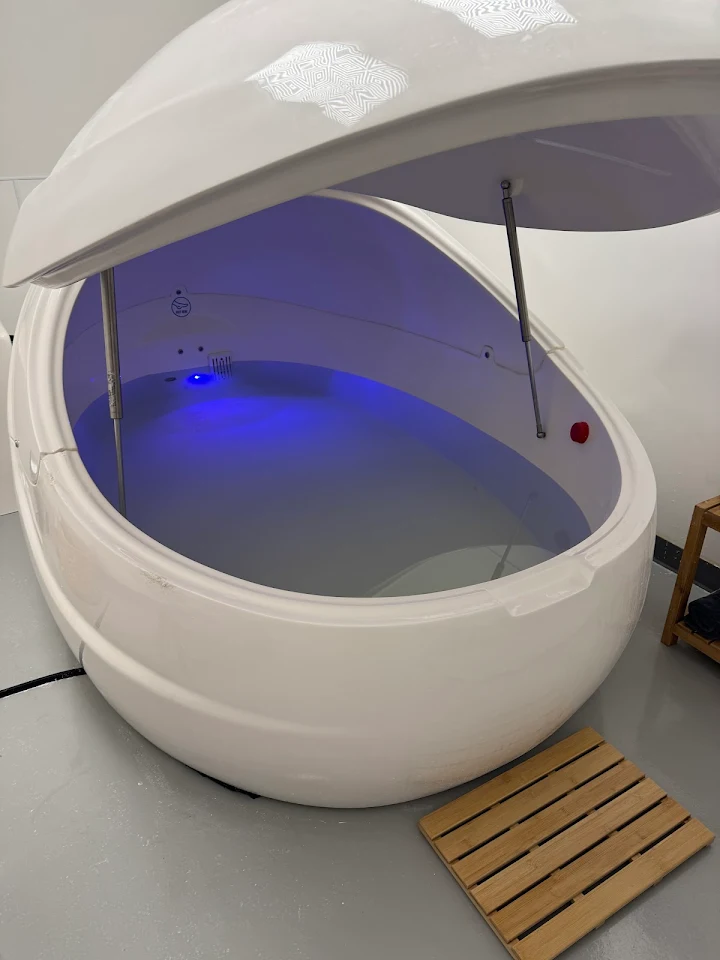
That’s when I found float therapy. Specifically, sensory deprivation tanks — those quiet, salt-filled pods where the outside world fades away and you’re left alone with your body and your thoughts. I learned they were commonly used to help manage PTSD symptoms by calming the nervous system and reducing sensory overload. So I found the nearest one and made an appointment. I didn’t know then that I was about to meet my own mind in the dark.
The Purple Lights and the Barking Dog
After my first float, I climbed out of the tank feeling strangely disoriented but peaceful. When the owner asked how it went, I smiled and said:“It was great. I just wish you could make the dog stop barking while people are floating. And the purple lights were pretty.”He grinned — the kind of grin that means something is about to shift.“Fun fact,” he said gently. “There were no purple lights. And there’s no dog.” What I had experienced was the Ganzfeld Effect — when the brain, deprived of external visual input, amplifies internal noise and creates its own sensory data. In the absence of stimulation, my mind filled in the gaps. Purple lights. Barking dogs. My brain, trying to make sense of silence.
I was fascinated. What else had my mind been filling in over the years? What stories had trauma written in the dark? Interestingly, I never experienced the hallucinations again in future floats. Once my nervous system adjusted, I often drifted into sleep. The tank became less of a spectacle and more of a sanctuary. It didn’t “fix” me. But it helped. It gave my body space to exhale. And when you’re healing from trauma, sometimes the most radical thing you can do is teach your nervous system that it’s safe to rest.
Over time, I became an advocate. I started gifting float sessions to friends and family. Not because it’s trendy. Not because it makes for impressive content. But because stillness, in a loud world, is a gift.
A Drive to Huntsville
Recently, I had the privilege of taking my bonus mom to Float Huntsville for her very first float. She was eager. Curious. Open. I love that about her. While she floated, I slipped into their infrared sauna — another form of warmth and release that I’ve come to cherish. There’s something about heat that feels like kindness. Like being held without being handled. When her session ended, she emerged glowing.“It was so therapeutic,” she said. And I believed her. Not because it’s magic. But because intentional stillness has a way of revealing what we’ve been carrying. We talked the entire drive — there and back. The kind of conversation that meanders and deepens without trying to impress anyone. We stopped at Chop N Fresh for vibrant salads that somehow tasted like joy. It wasn’t extravagant. It wasn’t far from home.But it was meaningful. And that’s the point. Travel for Meaning, Not Miles .
Some journeys span continents. Some span the distance between trauma and trust. Between hypervigilance and rest. Between surviving and healing. The float tank taught me something unexpected: when the external noise goes quiet, the internal stories get louder. But if you stay long enough — if you resist the urge to escape the silence — your nervous system begins to relearn safety.
Healing, like travel, is not about how far you go or how fast you get there. It’s about paying attention. It’s about choosing presence over proof. It’s about letting experiences change you instead of consuming them for content. In 2018, God rescued me. But the long way through — through therapy, through silence, through purple lights that weren’t real and barking dogs that never existed — that’s where He rebuilt me. And sometimes the most transformative trip isn’t stamped in your passport. It’s taken in the dark.


Leave a Reply