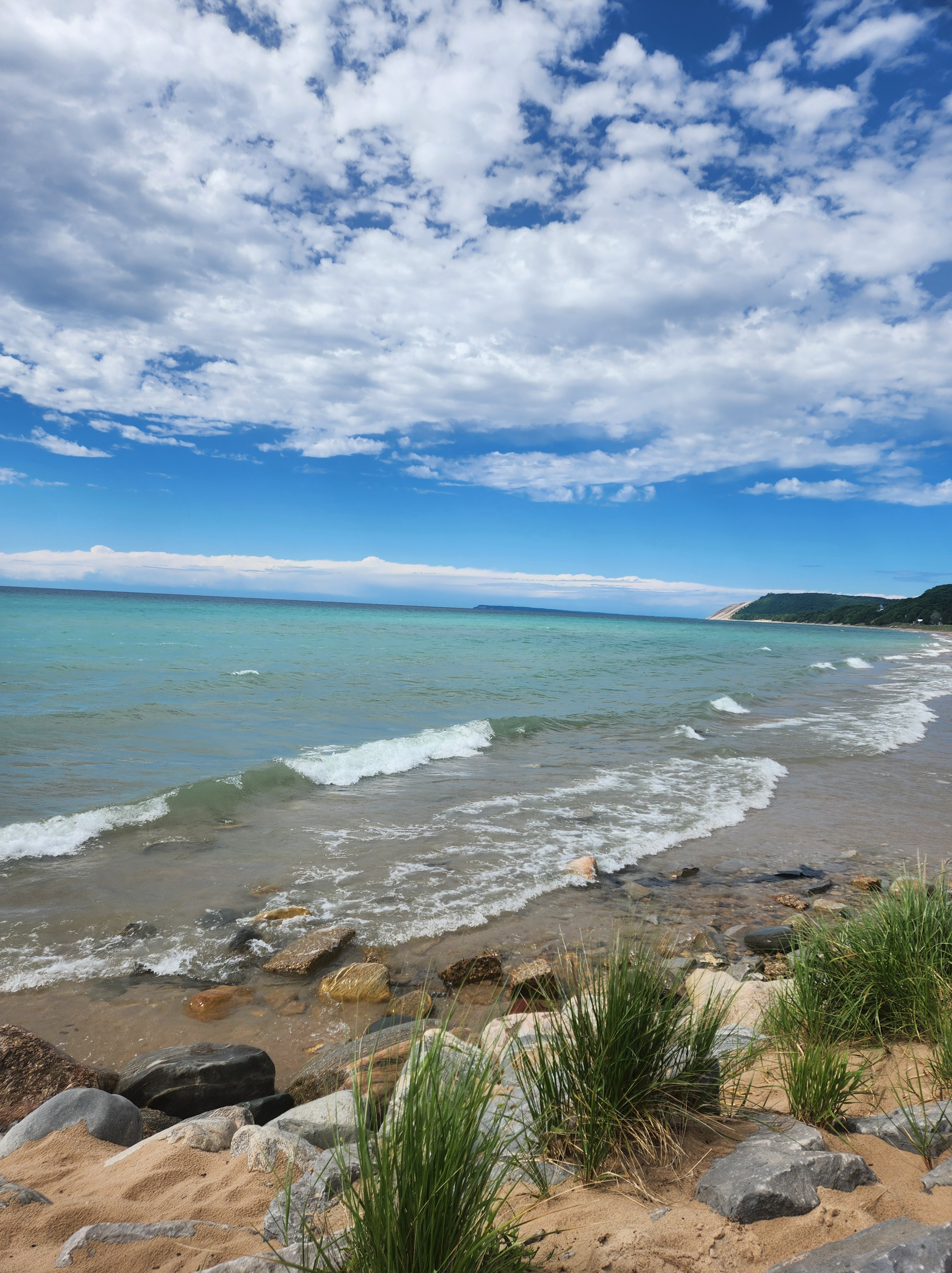
In June of 2024, we went looking for air. Not adventure. Not a checklist. Not even distraction.
Just air.
The months before had hollowed us out. Grief had come in waves-relentless and disorienting. Two of the people most woven into my life-my beloved aunt and uncle-were suddenly gone. Two dear friends, lost without warning. And only a month before this trip, we said goodbye to my mother-in-law. The kind of losses that don’t just bruise your heart-they rearrange it.
We arrived in northern Michigan carrying all of that. And somehow, Sleeping Bear met us gently. We stayed in Empire, tucked into a quiet neighborhood that felt more like a whispered welcome than a destination. The kind of place where front porches matter and mornings unfold slowly. I ran nearly every day while we were there-feet steady against pavement, breath syncing with the rhythm of the lake breeze. Grief felt less sharp when my body was moving. Less suffocating in the open air.
The dunes were staggering. Not in a flashy, performative way-but in a way that makes you instinctively quiet. The overlooks stretched wide and endless, blues layered upon blues, as if someone had blurred the line between water and sky. If you didn’t know better, you’d swear you were somewhere tropical. The view felt Caribbean in color, yet it was Lake Michigan shimmering before us.
It felt like mercy.
We hiked until our legs ached. We stood at the edge of those sweeping dunes, wind pressing against us, and for a few suspended moments, the heaviness lifted.
Not gone-but softened. As if the landscape itself was carrying some of it.
We wandered the little farmers market and filled our hands with simple abundance: fresh cherries so sweet they stained our fingertips, crisp asparagus, peonies heavy with fragrance, jars of emu oil, eclectic art that felt like pieces of someone’s story. We browsed antique shops and tiny storefronts, lingering without hurry. We found the local ice cream shop and ate cones that melted too fast in the sun.
We picnicked on the beach, the sand warm beneath us, the water impossibly clear. We walked the shoreline searching for the rare gemstones that wash up there-small treasures shaped by time and tide. There was something sacred about that quiet hunt. Heads bent low. Eyes scanning. The patient hope of finding something beautiful in the aftermath.
It felt like a metaphor we didn’t have to explain to each other.
Sleeping Bear is often described in superlatives-towering dunes, dramatic overlooks, miles of pristine shoreline. But what I will remember most is how it held us.
It didn’t demand anything.
It didn’t entertain us.
It simply existed in its vast, unbothered beauty-and invited us to do the same. There is something about standing before water that large that recalibrates your sense of proportion. Grief feels enormous-until you stand before something that has been shaping itself for thousands of years. The dunes have endured wind, storm, erosion, and time. They are constantly changing, yet still unmistakably themselves.
That week, we were changing too.
Not healed. Not fixed. But gently reshaped.
This is why we take the long way.
Not because it’s efficient. Not because it photographs well. But because sometimes the scenic route becomes sacred ground.
Sometimes an underrated corner of the map becomes the place where your shattered heart can exhale.
Sleeping Bear left us wanting more-not because we didn’t see enough, but because we felt something there. A reminder that beauty still exists. That sweetness still grows. That even after unimaginable loss, there are cherries to taste, dunes to climb, gemstones to gather.
And that manna still falls, even in the wilderness.




Leave a Reply